


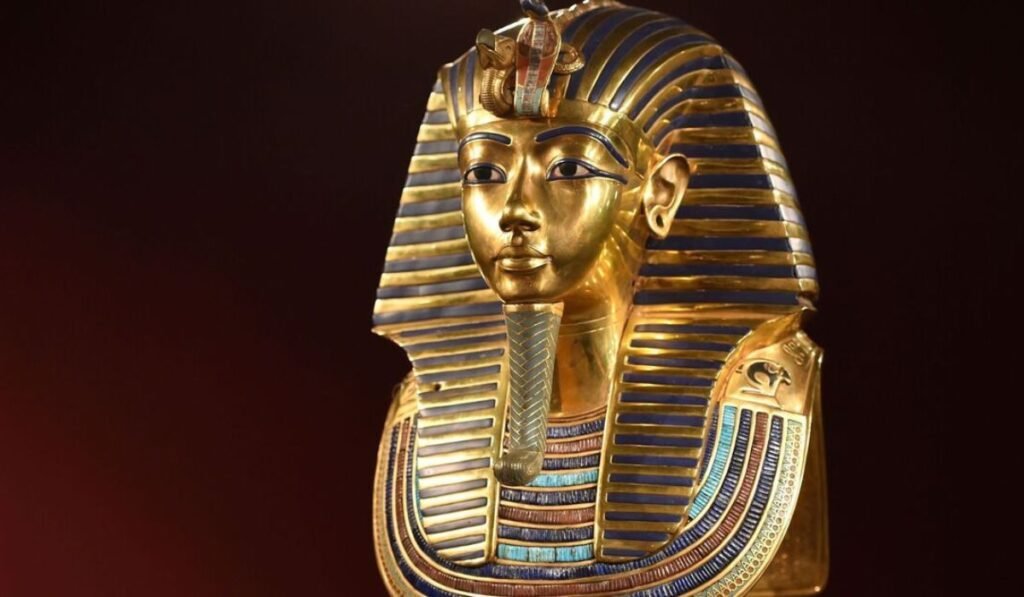
The enigma of Tutankhamun has fascinated historians, archaeologists, and ordinary people for more than a century. Tutankhamun, often called King Tut, became one of ancient Egypt’s most famous pharaohs after the discovery of his nearly intact tomb in 1922. The tomb contained thousands of objects, including a golden burial mask, jewelry, weapons, furniture, chariots, and other treasures.
Yet the gold was only part of the story. Tutankhamun ruled Egypt for a relatively short period and died when he was still a teenager. Because so little is known with certainty about his personal life, family, health, and death, many questions remain unanswered.
The Enigma of Tutankhamun is therefore not simply about a famous golden mask. It is about a young king whose short life became one of the most intriguing mysteries of ancient Egypt.
Who Was Tutankhamun?
Tutankhamun was an Egyptian pharaoh who lived during the 18th Dynasty, around the 14th century BCE. He became king while he was still a child. His reign lasted roughly a decade, although the exact details of his early life and political role remain subjects of historical research.
Tutankhamun was originally named Tutankhaten. His name was connected with Aten, the sun disk that had become central to the religious changes introduced during the reign of his predecessor, Akhenaten.
Later, Egypt returned toward the traditional worship of the old gods. The young king changed his name to Tutankhamun, which means “Living Image of Amun.”
This religious shift is an important part of the enigma of Tutankhamun because it shows how much political and religious change happened during his lifetime.
The Discovery That Changed Ancient Egyptian History
The biggest reason Tutankhamun became famous was the discovery of his tomb.
In November 1922, British archaeologist Howard Carter discovered the entrance to Tutankhamun’s burial place in the Valley of the Kings. The tomb had remained largely intact compared with many other royal Egyptian tombs.
When Carter and his team entered the burial chambers, they found an extraordinary collection of objects. The treasures included statues, chariots, weapons, clothing, jewelry, furniture, and ceremonial items.
The most famous object was the pharaoh’s golden burial mask.
The discovery attracted worldwide attention. Newspapers reported the treasures in great detail, and Tutankhamun quickly became one of the best-known figures from ancient Egypt.
But the discovery also created new questions. Why was the tomb so small for a pharaoh? Why was it filled with objects that appeared to have been made for other people? And what happened to the young king before his death?
These questions continue to add to the mystery.
Why Was Tutankhamun’s Tomb So Small?
One unusual feature of Tutankhamun’s burial is the relatively modest size of the tomb compared with some other royal burial complexes.
Tutankhamun appears to have died unexpectedly at a young age. Because Egyptian royal burials could take considerable time to prepare, there may not have been enough time to create a large tomb specifically for him.
Some objects inside the tomb also appear to have been originally intended for other individuals. Researchers have suggested that several items may have been adapted or reused for Tutankhamun’s burial.
This does not necessarily mean the burial was careless. Instead, it may show how quickly preparations had to be completed after the king’s death.
The unusual nature of the burial is another important piece of the enigma of Tutankhamun.
What Happened to Tutankhamun’s Parents?
Tutankhamun’s family history has been one of the most difficult parts of his story.
He lived during a period of major political and religious change. His predecessor, Akhenaten, abandoned many traditional religious practices and promoted the worship of Aten.
Modern research suggests that Tutankhamun was closely connected to Akhenaten, although questions about his exact parentage have remained complicated.
DNA studies of royal mummies have provided important information about Tutankhamun’s family. However, not every question has been settled, and interpretations of the evidence can differ among researchers.
His mother is also a subject of archaeological interest. Genetic and archaeological evidence has helped narrow down possible identities, but the family relationships of the Amarna royal household remain difficult to reconstruct completely.
The Health Problems of the Young King
Another part of the enigma of Tutankhamun concerns his health.
Scientific studies of his remains have suggested that Tutankhamun suffered from several physical problems. Researchers have found evidence that he may have had a foot deformity and other conditions that could have affected his ability to walk normally.
Some examinations have also suggested that he experienced malaria infections.
These findings have changed the way people think about the young pharaoh. Popular stories sometimes portray him as a strong and powerful ruler, but archaeological evidence suggests that his physical condition may have been much more complicated.
His health may also have played a role in understanding his death.
How Did Tutankhamun Die?
Perhaps the biggest question surrounding Tutankhamun is how he died.
For many years, people proposed dramatic explanations. Some theories suggested murder, while others suggested accidents or illnesses.
Modern research has produced evidence pointing toward a combination of health problems and Physical injury rather than a simple murder story.
One important discovery was evidence of a serious leg injury. Some researchers have suggested that a severe injury, possibly combined with malaria and other health problems, may have contributed to his death.
However, the exact cause cannot be stated with complete certainty.
That uncertainty is one reason the enigma of Tutankhamun continues to attract attention. Even with modern scientific techniques, reconstructing the final days of a person who lived more than 3,000 years ago is extremely difficult.
The Famous Curse of Tutankhamun
No discussion of King Tut is complete without mentioning the famous “curse of the pharaoh.”
After the tomb was discovered, several deaths among people connected with the excavation received enormous media attention. Newspapers and popular writers began suggesting that opening the tomb had released an ancient curse.
The story became one of the most famous legends associated with ancient Egypt.
However, there is no solid archaeological evidence proving that Tutankhamun’s tomb carried a supernatural curse.
The curse story became popular largely through newspapers, books, films, and later entertainment. It helped create the mysterious image surrounding Tutankhamun, but it should be separated from the historical evidence.
The Golden Mask and Its Meaning
Tutankhamun’s golden burial mask is probably the most recognizable object from ancient Egypt.
The mask was designed to represent the young king in an idealized form. It features a striped headcloth, a royal cobra and vulture on the forehead, and a long ceremonial beard.
Gold had enormous religious and symbolic importance in ancient Egypt. It was associated with the gods and with ideas of eternal life.
The mask was not simply valuable decoration. It was part of the king’s burial equipment and helped present him as a divine ruler prepared for the afterlife.
Its beauty is one reason the discovery of Tutankhamun’s tomb became such a major event in modern archaeology.
Tutankhamun’s Connection to the Afterlife
Ancient Egyptians placed great importance on preparing for life after death.
The objects inside Tutankhamun’s tomb reflect this belief. Food, clothing, furniture, weapons, jewelry, statues, and other items were placed with the king because they were believed to be useful in the next world.
The tomb also contained religious objects intended to protect the deceased and help him travel safely through the afterlife.
This gives historians more than just a collection of treasures. The burial provides valuable information about Egyptian beliefs, craftsmanship, royal life, and funerary traditions.
Why Does the Enigma of Tutankhamun Still Matter?
The enigma of Tutankhamun remains important because his story connects several major questions about ancient Egypt.
His life took place during a period of religious change. His family was connected to the unusual Amarna period. He became king while still young. He died unexpectedly. His tomb was smaller than expected but contained an extraordinary collection of objects.
At the same time, modern science continues to examine his remains and possessions.
Each new examination can provide additional information, but it can also create new questions.
That is what makes Tutankhamun different from many other ancient rulers. His tomb gives researchers an unusually detailed look into one individual, while the gaps in the historical record leave plenty of room for investigation.
What Tutankhamun’s Tomb Teaches Us About Ancient Egypt
Tutankhamun’s tomb is valuable not only because of its treasure but also because of what it tells us about Egyptian society.
The objects reveal the skill of Egyptian artists and craftsmen. They show how royal clothing, furniture, weapons, jewelry, and religious objects were made.
The burial also demonstrates the importance of the pharaoh in Egyptian culture. A king’s death was not simply a personal event. It was connected to religion, politics, and the belief that the king would continue his role in the afterlife.
Researchers can study these objects to understand trade, technology, religion, art, and royal traditions.
Conclusion
The enigma of Tutankhamun continues to capture people’s attention because it combines history, archaeology, science, religion, and unanswered questions. Tutankhamun was not one of Egypt’s longest-ruling or most powerful pharaohs, yet his name became famous across the world because of the extraordinary discovery of his tomb.
His golden mask is now an international symbol of ancient Egypt, but the real importance of Tutankhamun goes much deeper than gold and treasure.
His tomb has helped researchers understand Egyptian burial customs, royal culture, craftsmanship, religion, and the complicated period in which he lived. At the same time, questions about his family, health, and death remind us that the historical record is not always complete.
More than 3,000 years after his death, Tutankhamun still has mysteries surrounding him. Perhaps that is the greatest reason his story remains fascinating: every discovery can bring us closer to the truth while reminding us how much there is still to learn about the boy king of ancient Egypt.
FAQs
Who was Tutankhamun?
Tutankhamun was an Egyptian pharaoh of the 18th Dynasty. He became king as a child and ruled for roughly a decade before dying as a teenager.
Why is Tutankhamun so famous?
Tutankhamun became famous mainly because his tomb was discovered in 1922 with a remarkable collection of treasures and burial objects.
What is the enigma of Tutankhamun?
The enigma of Tutankhamun refers to the many unanswered questions surrounding his family, health, reign, death, burial, and the unusual contents of his tomb.
Was Tutankhamun murdered?
There is no conclusive evidence proving that Tutankhamun was murdered. Scientific studies have identified health problems and injuries that may have contributed to his death, but the exact circumstances remain uncertain.
Is the curse of Tutankhamun real?
There is no reliable evidence showing that Tutankhamun’s tomb carried a supernatural curse. The curse became popular through media stories and later entertainment.
Read More About : Rovexamagazine